

The Answer Is Yes—But Not in the Way Most People Think
Many people assume that traffic congestion is caused simply by having too many vehicles on the road.
As a result, the common solution is often to build more roads.
However, many cities around the world have discovered that expanding road infrastructure alone does not eliminate congestion in the long term.
Traffic problems are influenced by many factors, including:
How Does AI Help Reduce Traffic Congestion?
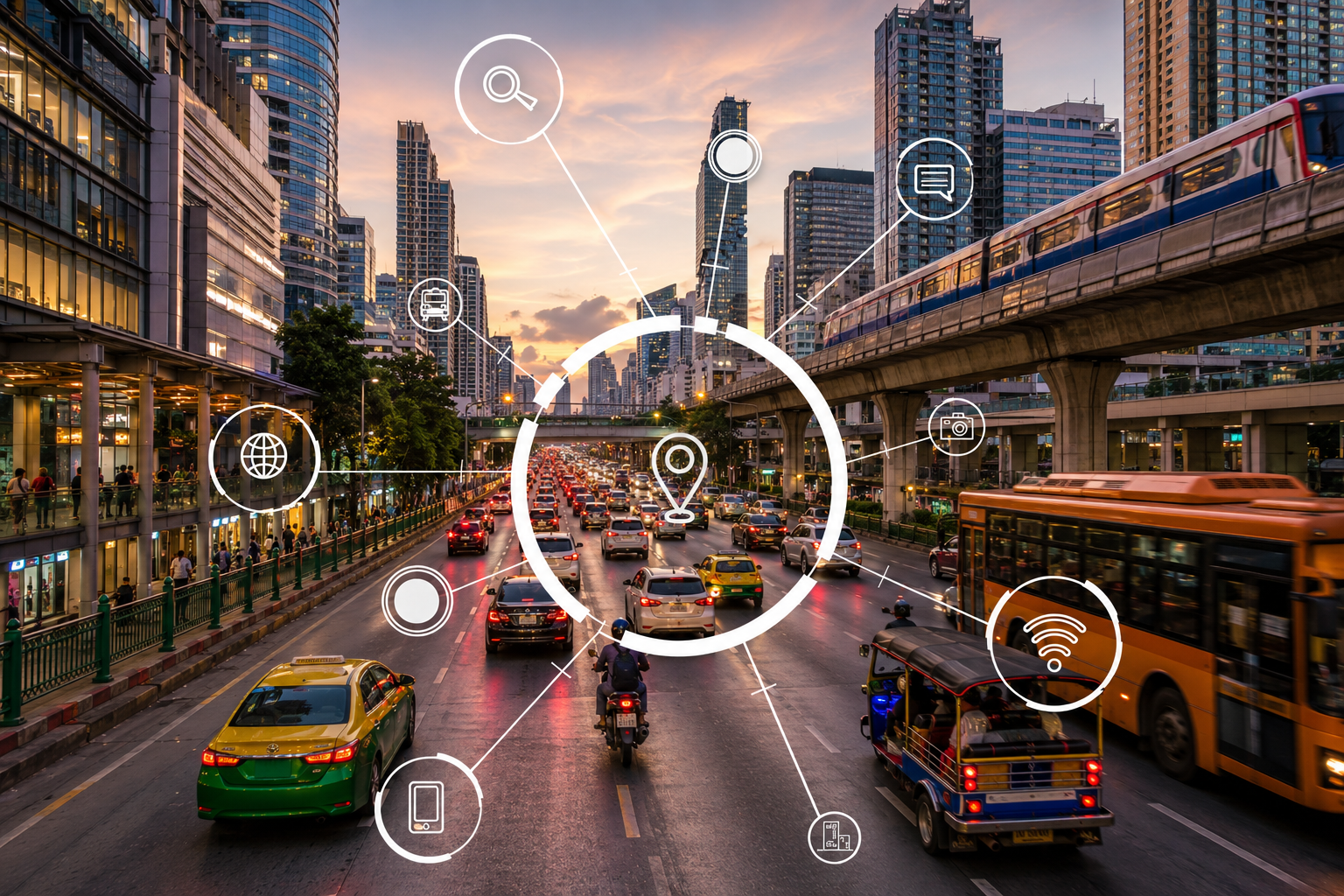
AI collects and analyzes data from multiple sources, including:
The system continuously processes this information and responds to changing conditions automatically.
Examples include:
This allows cities to manage traffic more efficiently without necessarily building new roads.
Cities Around the World Are Already Using AI
Leading cities worldwide have adopted AI-powered traffic management systems to:
AI does not make traffic disappear overnight.
Instead, it helps cities use existing infrastructure more intelligently and effectively.
The Future of Mobility Is Data-Driven
The future of traffic management may not depend on building wider roads or larger highways.
It depends on helping cities better understand how people move.
When governments and transportation agencies can monitor traffic conditions in real time and continuously analyze mobility patterns through AI, they can make faster and better decisions.
This leads to:
Because in the world of Smart Transportation, better data creates better journeys for everyone.